

I've been thinking about copies.
Not forgeries, exactly. Just the way the world has gotten very good at making everything feel like it already exists somewhere else. You find a piece of furniture you love and realize it's in eleven design blogs and four of your friends' apartments. You buy a print because it moved you and then you see it in an airport lounge.
It's nobody's fault. That's just how things are made now.
But there's a specific kind of restlessness that comes from surrounding yourself with things that could belong to anyone. A low-grade dissatisfaction you can't always name. A sense that something is missing, even when the room looks right.
What's missing, I think, is the unrepeatable.
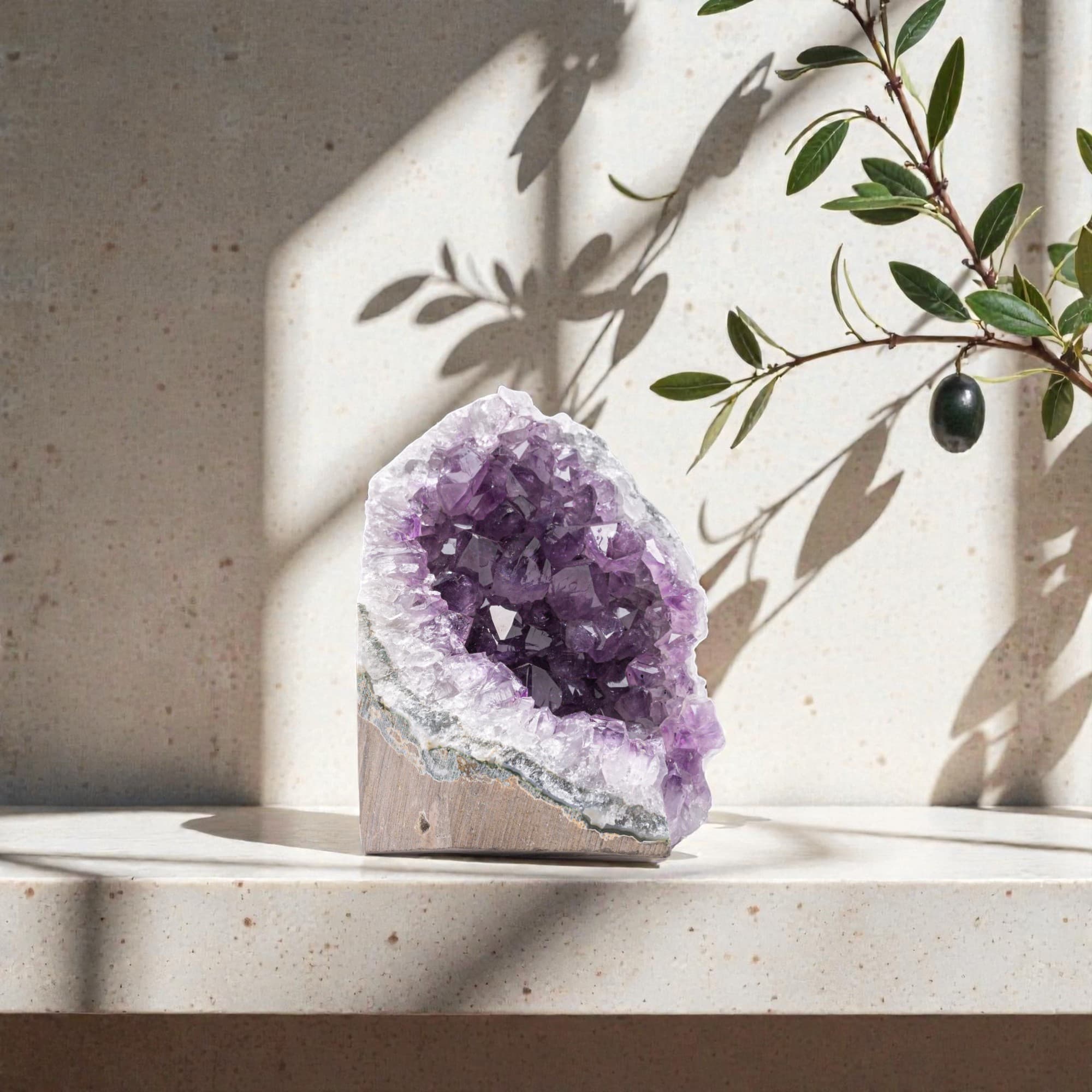
There's a phrase I keep coming back to: nature doesn't mass produce. Every amethyst formation that comes out of the ground in Artigas, Uruguay took somewhere between 100 and 250 million years to become what it is. That exact arrangement of crystals, that specific depth of violet, that particular cathedral shape, that weight you feel when you lift it, will never exist again. Not in another quarry. Not in another century. Not anywhere.
This isn't a marketing claim. It's geology.
And yet we walk past this every day. We'll pay a premium for a handbag because fewer than three hundred were made. We'll seek out a restaurant because the chef only makes forty covers a night. We understand scarcity when it's been packaged for us. We're less practiced at recognizing it when it arrives still raw, still covered in the earth it came from.
The most exclusive things on earth don't have logos. They have formation histories.
I think about the people who've kept natural specimens in their homes for centuries. Not collectors in the museum sense, but ordinary people who understood something intuitively. That an object the earth made once, and will never make again, is worth holding onto. That owning something irreplaceable is different, in some fundamental way, from owning something rare.
Rare means fewer. Irreplaceable means only.
A room built around one unrepeatable object has a different quality than a room built around a collection of beautiful things. The eye keeps coming back. Guests reach out to touch it before they realize they're doing it. Something about its presence resists the feeling of being temporary, of being swappable, replaceable, upgradeable.
It stays. And slowly, it makes the space around it feel more permanent too.
That's the luxury that doesn't go out of style.

This 116 lb piece just arrived from Artigas, Uruguay. Hand-selected. One of a kind, in the most literal sense. Once it's gone, it's gone.




Share: